In the competitive landscape of modern food and beverage (F&B) and retail sectors, third-party delivery applications have become a necessary evil. While they offer indispensable market visibility and expanded reach, the high commission rates—often soaring up to 30% per transaction—severely erode profit margins, turning high-volume sales into low-margin churn. For businesses seeking sustainable, profitable growth, the reliance on these external platforms must be strategically minimized.
The definitive solution is establishing a robust Direct Sales Channel through a dedicated Web Ordering application. This strategy is about reclaiming control, owning the customer relationship, and channeling orders through a platform where the business keeps 100% of the profit, minus minimal transaction fees. By leveraging the power of an advanced Web Application Solution Saudi Arabia, a restaurant or retailer can transform their operation into an intuitive online business, building a resilient model that cultivates long-term loyalty and attracts new customers.
This article details the three core strategies for deploying a cutting-edge web ordering app to successfully reduce commission reliance and maximize profitability.
1. Strategy One: Building a Superior, Frictionless Digital Destination
The primary reason customers often default to a third-party application is convenience. To compete, the direct channel must offer a digital experience that is not only comparable but demonstrably superior and more engaging.
A. Seamless and Branded Digital Experience
The web application must serve as a seamless, branded digital extension of the physical restaurant or store. This is vital for customer trust and retention:
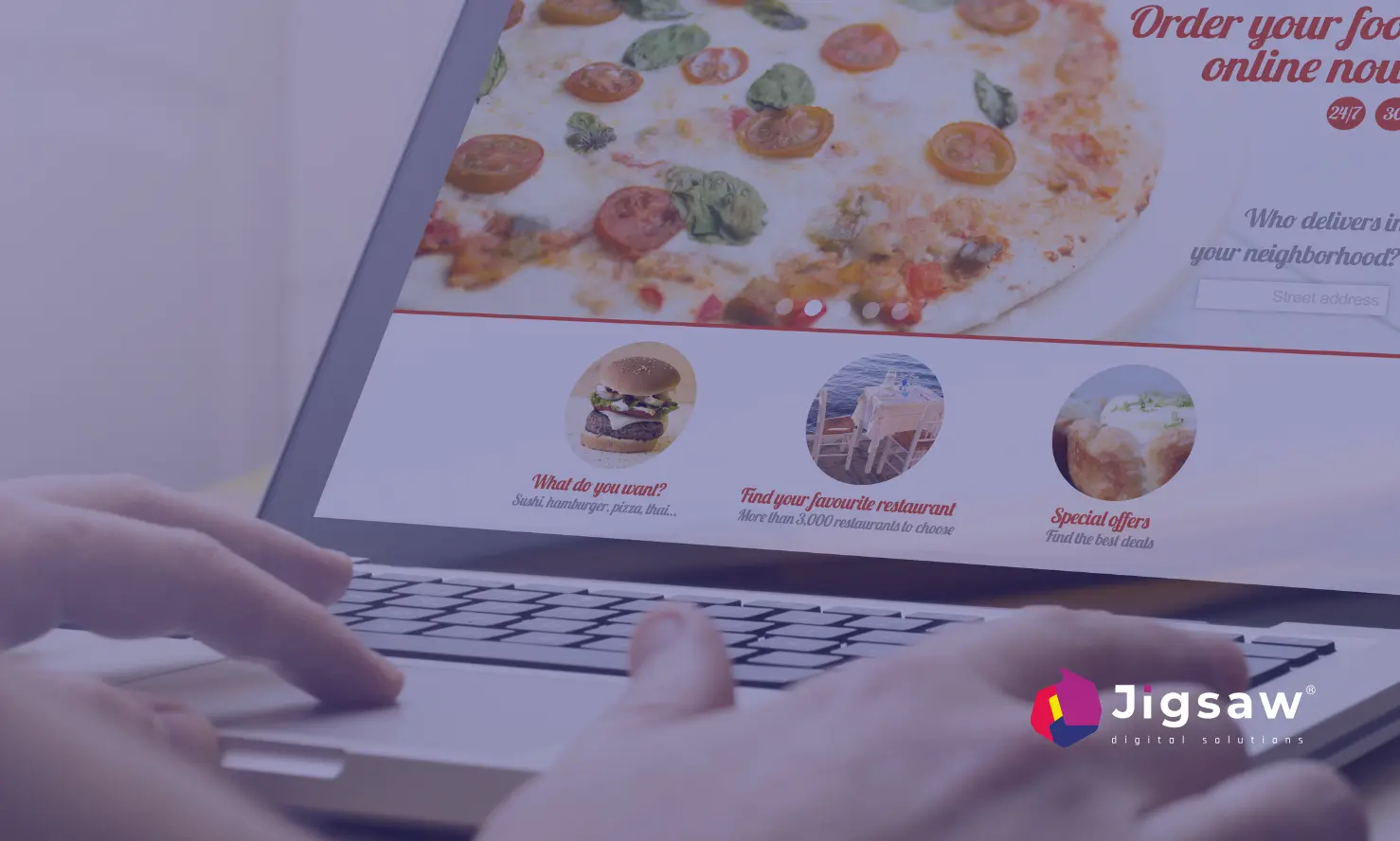
- Visual Engagement: Leveraging the power of an Interactive Web App for F&B & Retail, the application should provide a highly visual, engaging interface with high-quality imagery and detailed, persuasive item descriptions. This visual focus encourages greater exploration and impulse buying, something often diluted on standardized third-party platforms.
- Streamlined Workflow: The ordering process—from selecting items to checkout—must be intuitive and require minimal clicks. The system should remember customer preferences, addresses, and payment methods, reducing the transaction time to mere seconds for returning users.
- Multi-Branch Menu Consistency: For multi-unit operations, the Multi-Menu Per Branch Capability ensures that the customer sees the correct menu, pricing, and availability based on their selected location. This eliminates customer frustration and maintains operational consistency, reinforcing the professional integrity of the brand.
B. Strategic Promotion of the Direct Channel
A superior platform is useless if customers don't know it exists. The business must actively promote the direct channel across all touchpoints:
- In-Store Marketing: Utilize QR codes on tables, receipts, and packaging that lead directly to the Online Ordering Web Application Saudi Arabia. Offer a clear incentive (e.g., "Order Direct and Save 10%") that provides immediate value to the customer.
- Loyalty as the Anchor: The direct channel must be anchored by a rewarding Customer Loyalty Program Integration. Customers are motivated to switch when they know ordering direct is the only way to earn or redeem points, ensuring a consistent and personalized journey for every loyal customer.
- Email and Social Media Campaigns: Use the Marketing Suite for Web Applications to run targeted campaigns that highlight the financial benefit and personalization gained by ordering through the company's proprietary site.
2. Strategy Two: Operational Control and Data Ownership
The shift to a direct channel is fundamentally about reclaiming operational control and ownership of customer data—assets that are severely compromised when relying on external delivery giants.
A. Strategic Delivery Configuration
Third-party platforms dictate delivery zones and pricing, often to the detriment of the restaurant’s profitability. A proprietary web app grants the business complete control over logistics:
- Delivery Area Configuration Feature: The business can define precise, profitable delivery zones, optimizing routes and focusing on areas where service can be reliably fast and economical. This control allows the business to offer lower delivery fees (or free delivery) than third-party competitors, creating a financial incentive for the customer to order direct.
- Dedicated Logistics Management: The application should integrate seamlessly with in-house fleet management or preferred logistics partners, giving the restaurant control over service quality and delivery times—factors that critically influence the customer experience.
- Optimized Subscription Management: For businesses offering regular meal plans or recurring purchases, the Order Subscription Management Web App provides automated billing and delivery management, streamlining a complex process into a simple, reliable service that fosters long-term commitment.
B. Unfiltered Data Insight and Optimization
Data is the lifeblood of modern F&B growth. By processing orders through the proprietary platform, the business secures 100% ownership of every transaction record, preference, and behavioral signal:
- Proprietary Analytics Tools: The platform must include Data Insight Tools for Businesses that provide immediate, unfiltered access to metrics like customer lifetime value, churn rates, and true average order value.
- Visualizing Demand: Tools such as Visual Reports with Heatmaps provide intuitive, graphical representations of order density by time and location. This data is invaluable for strategic decision-making, such as optimizing staff allocation, focusing marketing efforts, and accurately identifying prime locations for future branch expansion.
- Targeted Personalization: With a clear view of purchase history, the business can move beyond generic mass marketing. It can precisely identify high-value customers and deploy retention offers via the Web-App for F&B and Retail Saudi Arabia or email, maximizing the return on investment for every marketing dollar spent.
The ultimate goal of the direct channel is to grow the business without the financial drag of commissions. This requires leveraging the 30% margin advantage to incentivize behavior and drive average order value (AOV).
A. The Commission Savings Advantage
By shifting a $100,000 monthly revenue stream from a 25% commission app to a direct channel with a 3% transaction fee, the business instantly saves $22,000. This saved capital must be reinvested strategically:
- Incentivizing the Switch: Use a small portion of the commission savings (e.g., a 10% discount on the first order) to provide a compelling financial reason for the customer to try the direct channel.
- Loyalty Fund: Allocate a larger portion of the savings to enhance the loyalty program, making the rewards more generous and frequent for direct customers. This reinforces the message that ordering directly is financially better for the customer.
B. AOV Maximization Through Customization
The direct channel is optimized for upselling, cross-selling, and customization, which are crucial for boosting profitability:
- Customized Prompts: Unlike third-party apps with rigid interfaces, the proprietary application allows for strategic product pairings and upselling prompts specific to the brand’s high-margin items.
- Tiered Rewards: Integrate the Customer Loyalty Program Integration to offer better reward tiers exclusively to direct customers (e.g., "Silver" status on the app, "Gold" status on the website). This exclusivity drives higher-frequency orders on the profitable direct platform.
- High-Margin Menu Focus: Utilize the Multi-Menu Per Branch Capability to strategically feature high-margin items prominently on the direct web application, while perhaps burying low-margin items that are commonly promoted on commission-based platforms.
C. Scalability and Reliability through the Cloud
For a direct channel to be truly profitable and competitive, it must be reliable and scalable. The reliance on a Cloud-Based Ordering System Riyadh ensures operational resilience:
- Zero Downtime: Cloud architecture guarantees high availability, ensuring that the platform can handle massive order volumes during peak times without crashing, preventing the loss of high-value direct orders.
- Rapid Deployment: For businesses rapidly expanding across the KSA, the cloud-based nature allows for instant deployment and configuration of the Web-App for F&B and Retail Saudi Arabia in new locations, supporting aggressive growth targets.
- Centralized Management: The cloud system provides a single, unified point of control for all ordering and customer data, ensuring the brand can effectively manage its sprawling digital and physical operations from a centralized hub.
Conclusion:
The future of profitable F&B and retail operations lies in breaking free from the financial dependency of third-party delivery commissions. The strategic establishment of a Direct Sales Channel via a powerful, branded Web Application Solution Saudi Arabia is the only sustainable path forward.
By prioritizing a superior digital experience (Strategy 1), reclaiming data ownership and operational control (Strategy 2), and strategically reinvesting commission savings to incentivize customer behavior (Strategy 3), businesses can successfully migrate a significant portion of their order volume to their own platform. This move transforms order management into a strategic, data-rich activity that cultivates deep, long-term customer relationships and ensures that the business, not an intermediary, owns both the customer and the profits. The dedicated web app is the key to securing a high-margin, scalable, and resilient business model for growth across the region.



.avif)
.avif)
.avif)